On a cool English morning, down a lane off Icknield Road in Oxfordshire, there is a set of green gates. Behind them sits what looks like a collection of farm sheds, a weighbridge, and some low-humming machinery. It does not look like a power station. But this is Icknield Farm AD — a farm-scale anaerobic digestion (AD) plant that pumps roughly 6 million cubic metres of biomethane into the UK gas grid every year, enough to supply around 5,300 homes (IEA, 2025; Shen et al., 2015).
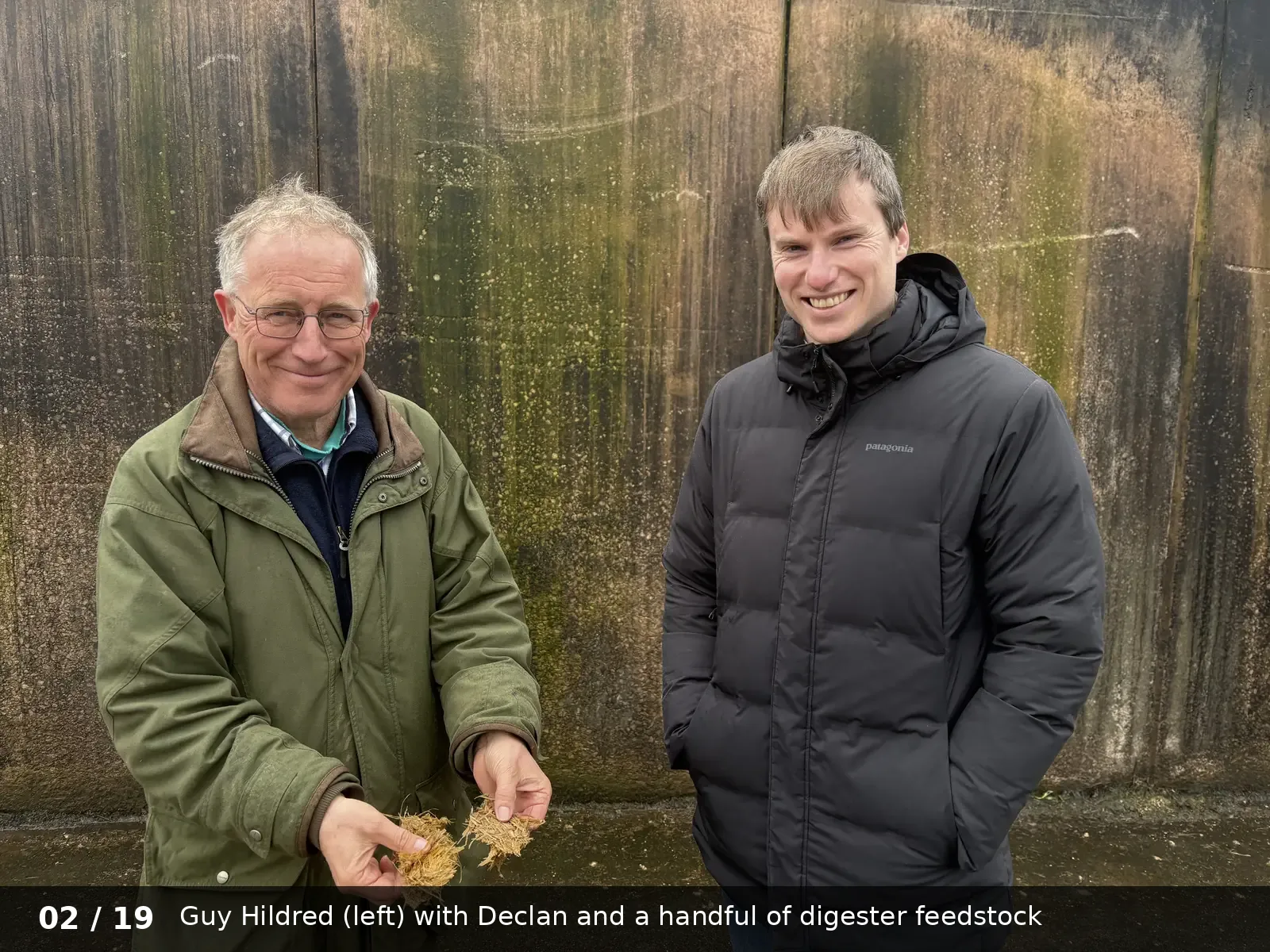
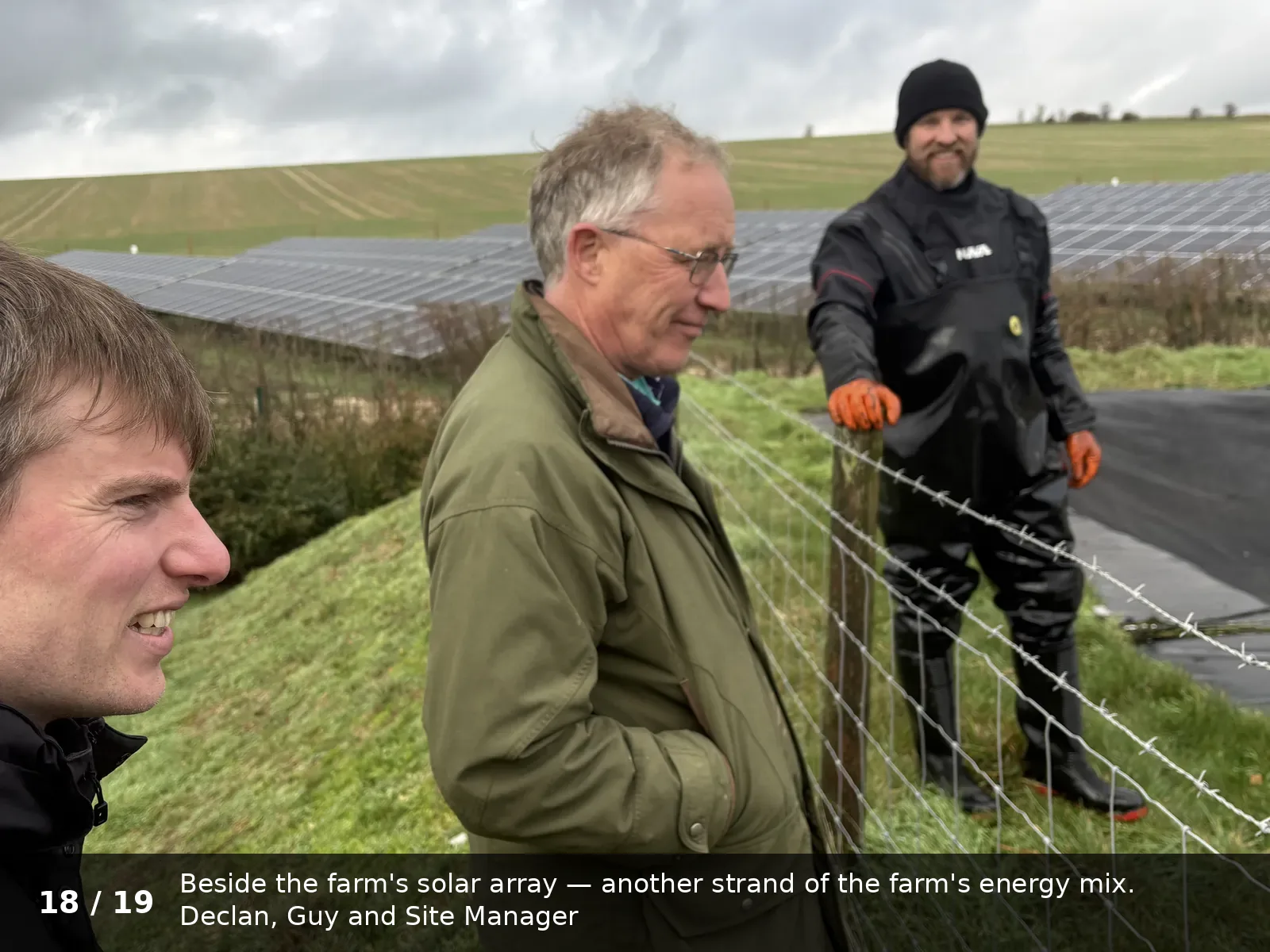
Guy Hildred runs the place. He grew up on the farm, trained as a mechanical engineer, got bored with standard arable farming, and ended up building one of the more interesting small-scale energy operations in the country. He walked us through the whole thing, start to finish.
Guy inherited a mid-size family farm near Wallingford, in joint ownership with his brother and sister. He has no formal farming education, however he did study and work as an engineer. As he put it: “I went to university and came back with a bit of business experience and knowing how to look at a problem and go, well, that works or that's just nonsense.”
That attitude — question everything, ignore convention where it makes no sense — runs through the whole operation. After about ten years of standard wheat-and-barley farming, Guy was restless. “After about 5 or 10 years farming, I suddenly realised I was bored.” He had expanded to contract-farming around 6,500–7,000 acres for other landowners, but even that had settled into routine.
Then a chap called David B. knocked on the door.
David arrived with an idea: anaerobic digestion, but with a twist. Guy had already looked at AD and visited plants in Germany, but the older model — generating electricity — lost too much energy as waste heat. “When broadcasting the energy, 50% of it is immediately lost in heat. And that offended me.” This is consistent with wider experience: the thermodynamic limits of internal‑combustion engines and parasitic loads mean combined heat and power (CHP) AD plants typically convert only 35–50% of the feedstock energy into usable electricity and heat (Ryckebosch et al., 2011; Shen et al., 2015).
What David brought was new gas-separation technology that could clean the biogas and inject biomethane straight into the gas grid. Guy had the land and the farming knowledge. David, a former City financier, had access to investment capital. “We had lovely complementary skills,” Guy said.
The plant was built as a turnkey project by a German-Dutch company called EnviTec. From signing the deal to producing gas took about 18 months. The initial cost was around £9.5 million; with upgrades over the years, total investment has reached about £11 million. Capital costs of this order are typical of farm-scale gas‑to‑grid projects in Northern Europe (Bauer et al., 2013; IEA, 2025).
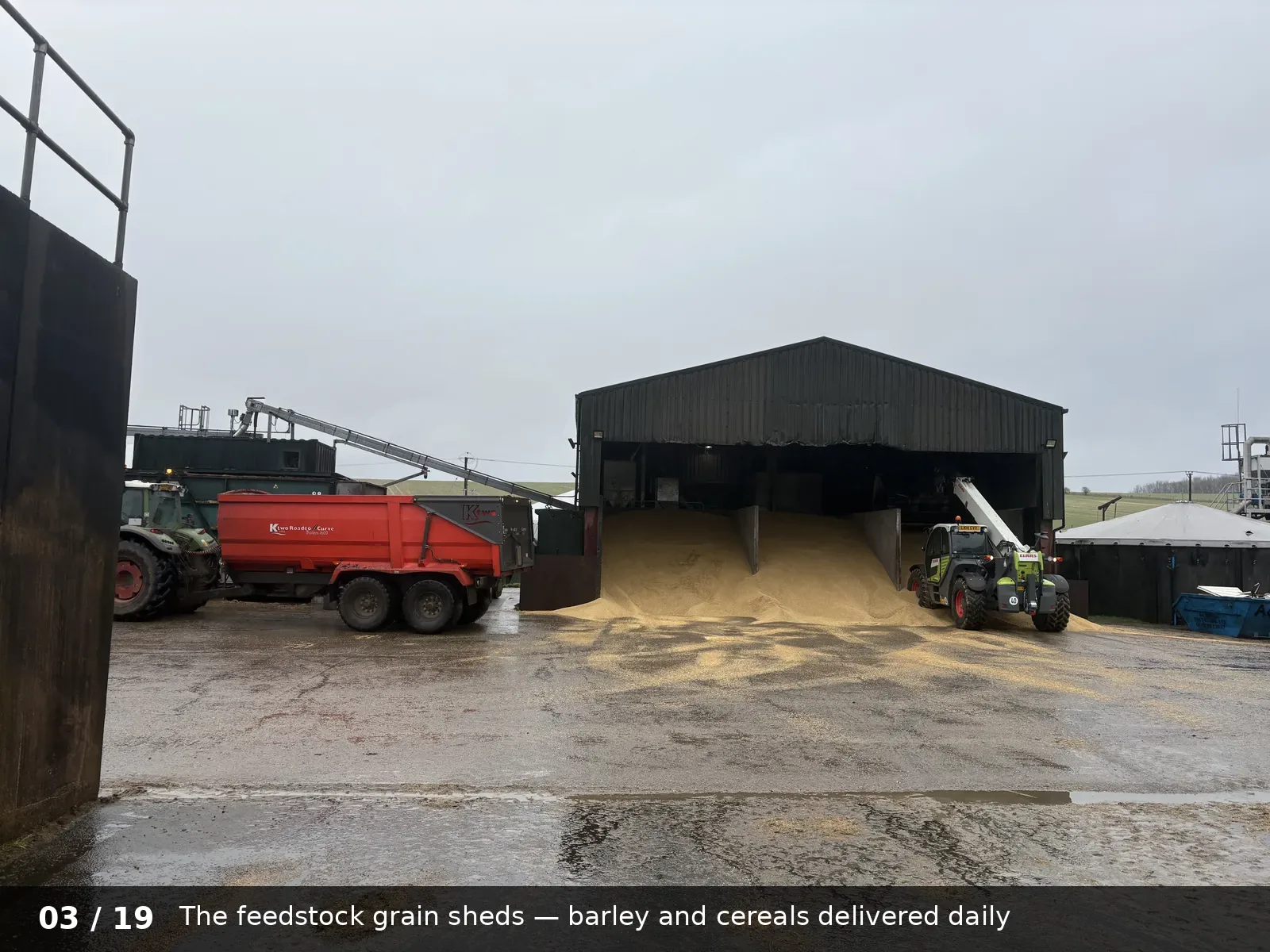
The plant does not process food waste or sewage. It runs on agricultural feedstocks — crops and crop by-products. Each day, roughly 80-plus tonnes goes in.
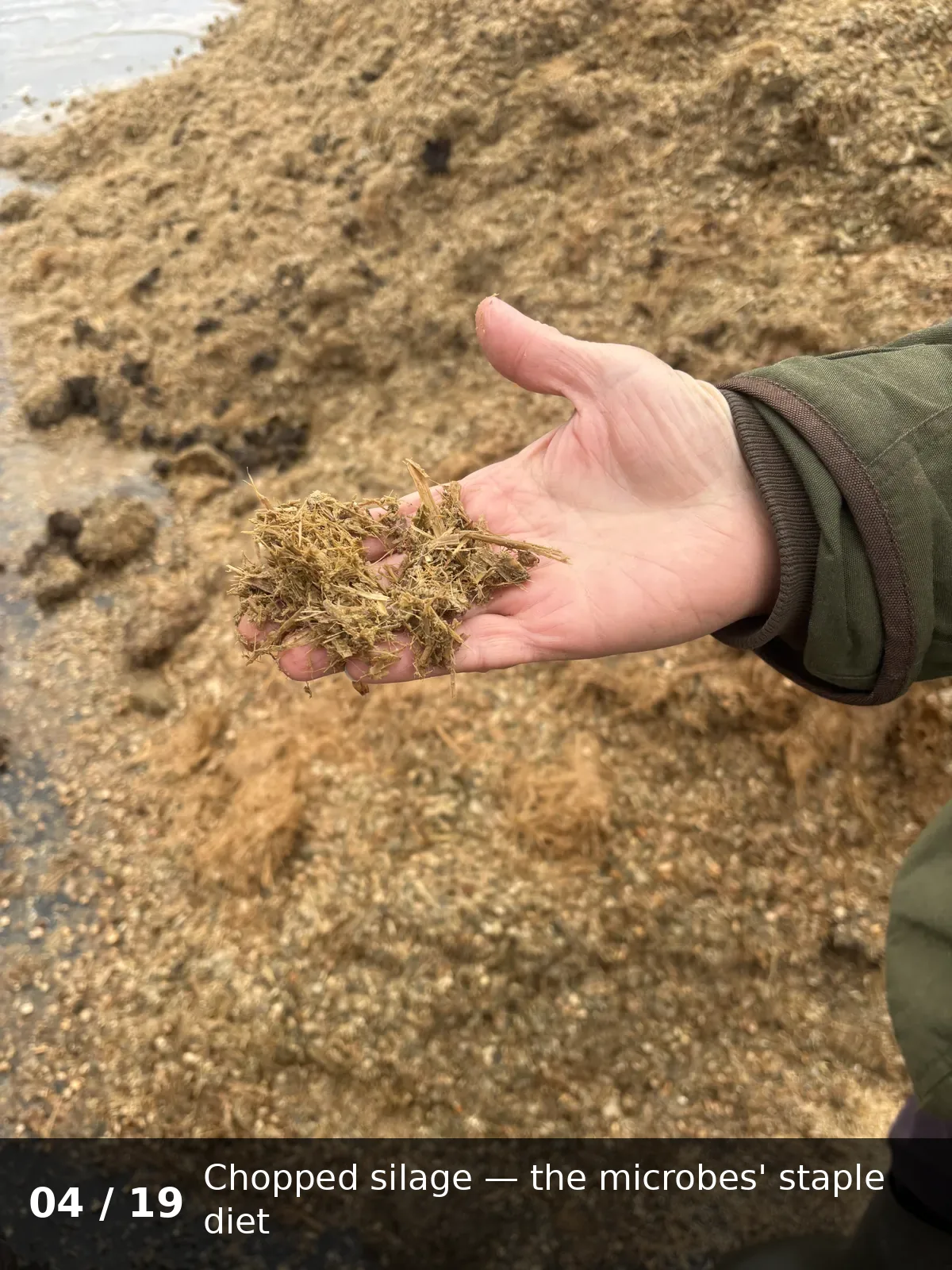
Maize silage and hybrid rye silage —chopped and put into a sileage pit, just like any dairy farmer would recognise— are staple AD feedstocks across Europe because of their high and consistent biogas yields (Herrmann et al., 2016; Basu et al., 2010).
Barley — typically 22–25 tonnes per day, often sub-standard grain with ergot or some other problem meaning it can't enter the food or animal feed chain. This grain use fits a growing pattern of using downgraded cereals and by-products rather than prime food-grade grain (Bauer etal., 2013). In Australia, fungal contamination is a persistent background problem in most grain production.
Oat husk pellets — about 6 tonnes per day, sourced from processing plants in Bedford and Carlisle. The husks left after oat milk or cereal production, which would otherwise go to low-value burning or landfill — are one of many examples of woody, fibrous plant leftovers (lignocellulosic residues) that can be diverted from disposal into energy and fertiliser production (Scarlat et al., 2018; IEA, 2025).
Guy's approach to sourcing is simple and deliberate: keep the recipe consistent. “We have been very successful because we don't vary. We do our absolute damnedest never to change the ration.” The microbes in the digester have adapted to a specific diet. Sudden changes slow the biology down. Stable feedstock supply and gradual changes in diet are widely recognised as key to stable digester performance (Angelidaki etal., 2011; Appels et al., 2008).
“It's a bit like a dairy cow. Anybody who's farmed dairy cows would understand what I'm talking about.”
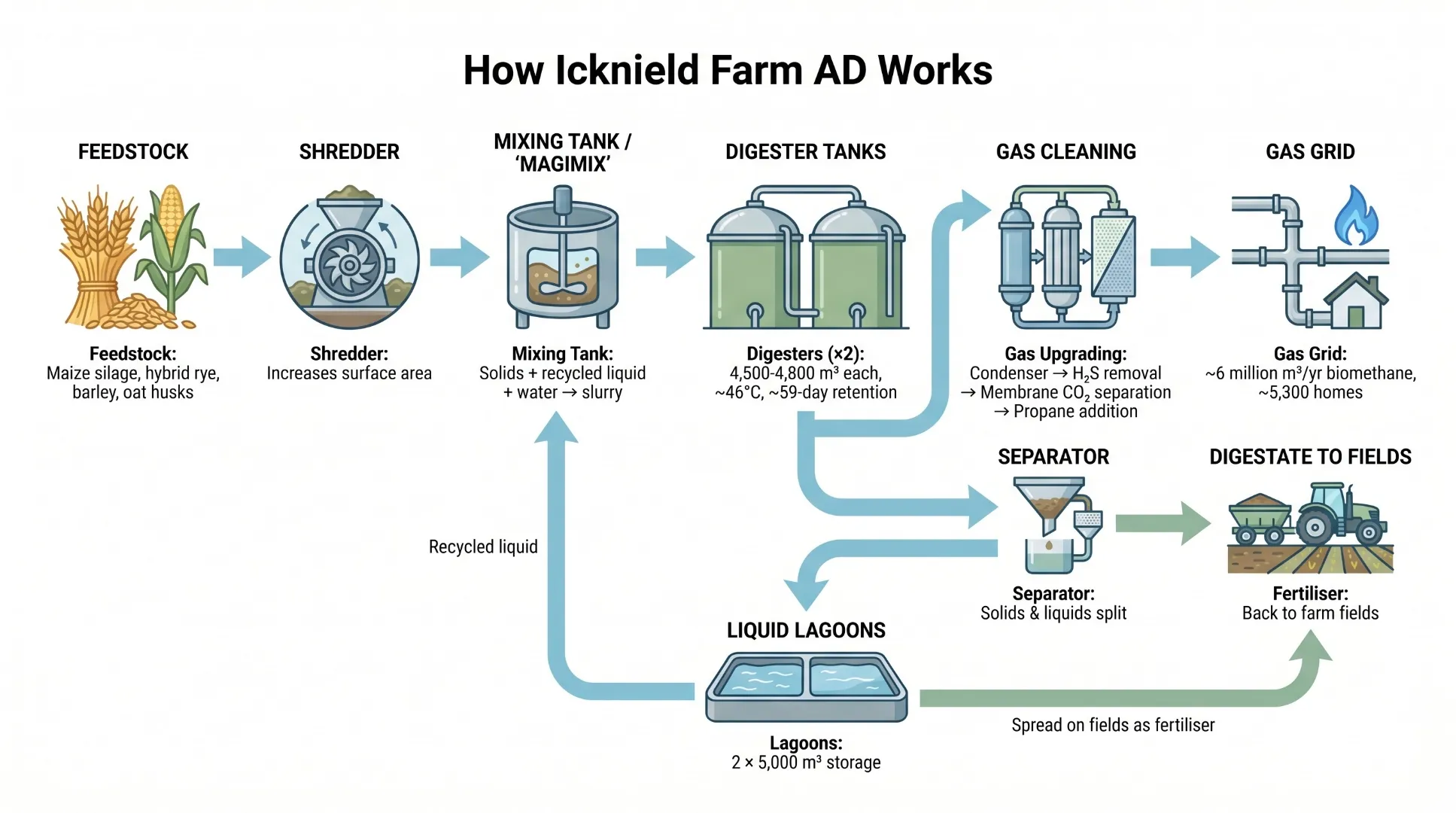
Here is how the plant works, in plain terms. Anaerobic digestion follows four overlapping biological stages —hydrolysis, acidogenesis, acetogenesis and methanogenesis — that together convert complex plant polymers into methane‑rich biogas under oxygen‑free conditions (Angelidaki et al., 2011; Appels et al., 2008).
The feedstock first passes through a shredder. This opens up plant cells and increases the surface area so the microbes can get to work more quickly. “All that does is basically increase the surface area... the bugs can get at it more easily.” It also makes the material flow better through the pumps (Angelidaki et al., 2011; Shen et al., 2015).
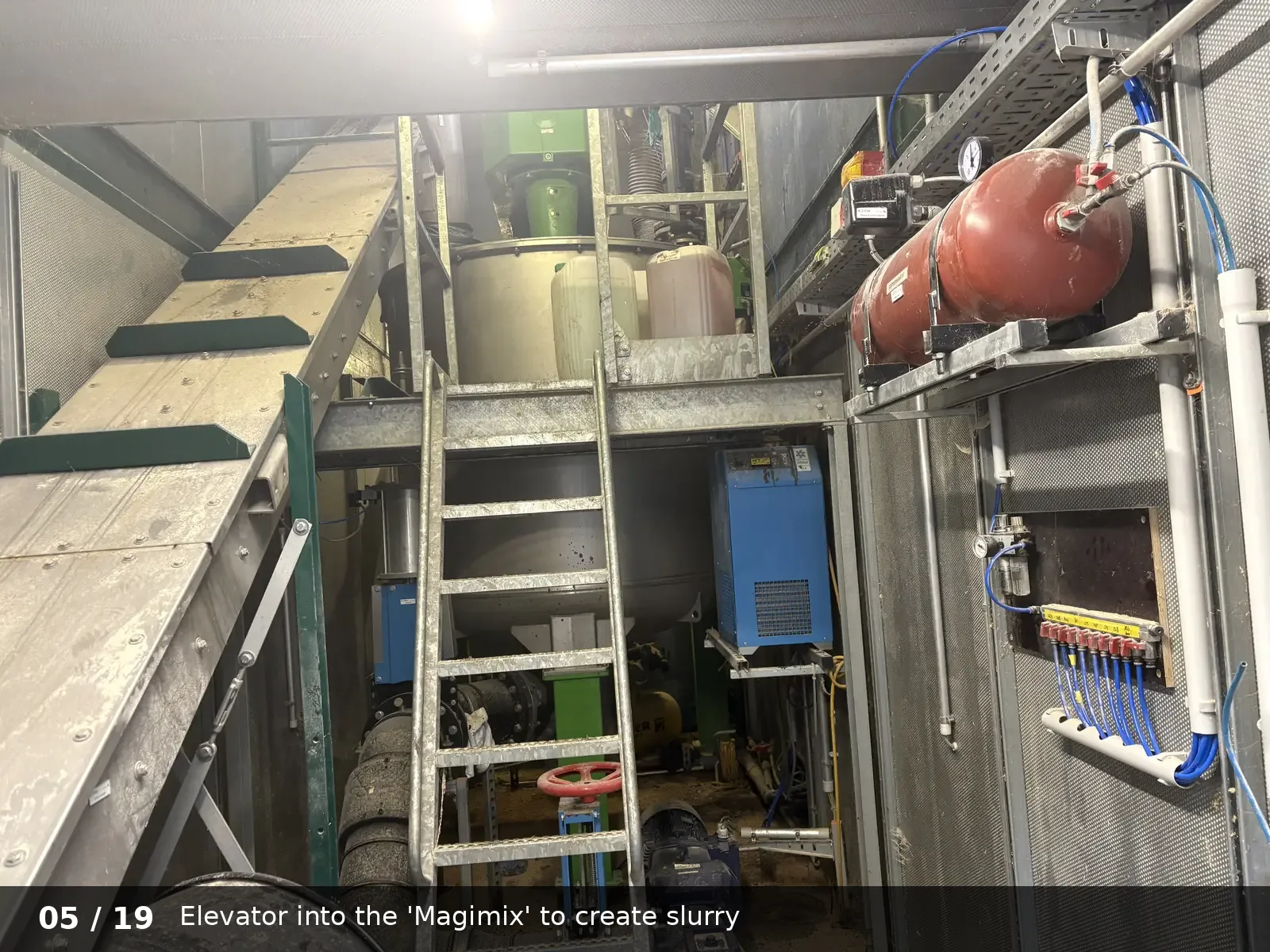
The shredded material drops into a large mixing tank — the team calls it the Magimix. Here, solids are blended with recycled liquid digestate and water to create a pumpable slurry. The dry matter going in is roughly 70/30 solid to liquid; inside the digesters, it runs at about 10% dry matter and 90% water, in line with typical total solids levels for wet AD (Appels et al., 2008).
This mixing stage also pushes air out. The microbes that produce methane need an oxygen-free environment. “Most of the magic-mix part of it is to exclude the air,” Guy explained. Methanogens are strict anaerobes (cannot tolerate oxygen at all), so excluding oxygen at this stage is essential (Angelidaki et al., 2011).
The system runs 24/7, automatically cycling through feed rounds every 20–25 minutes.
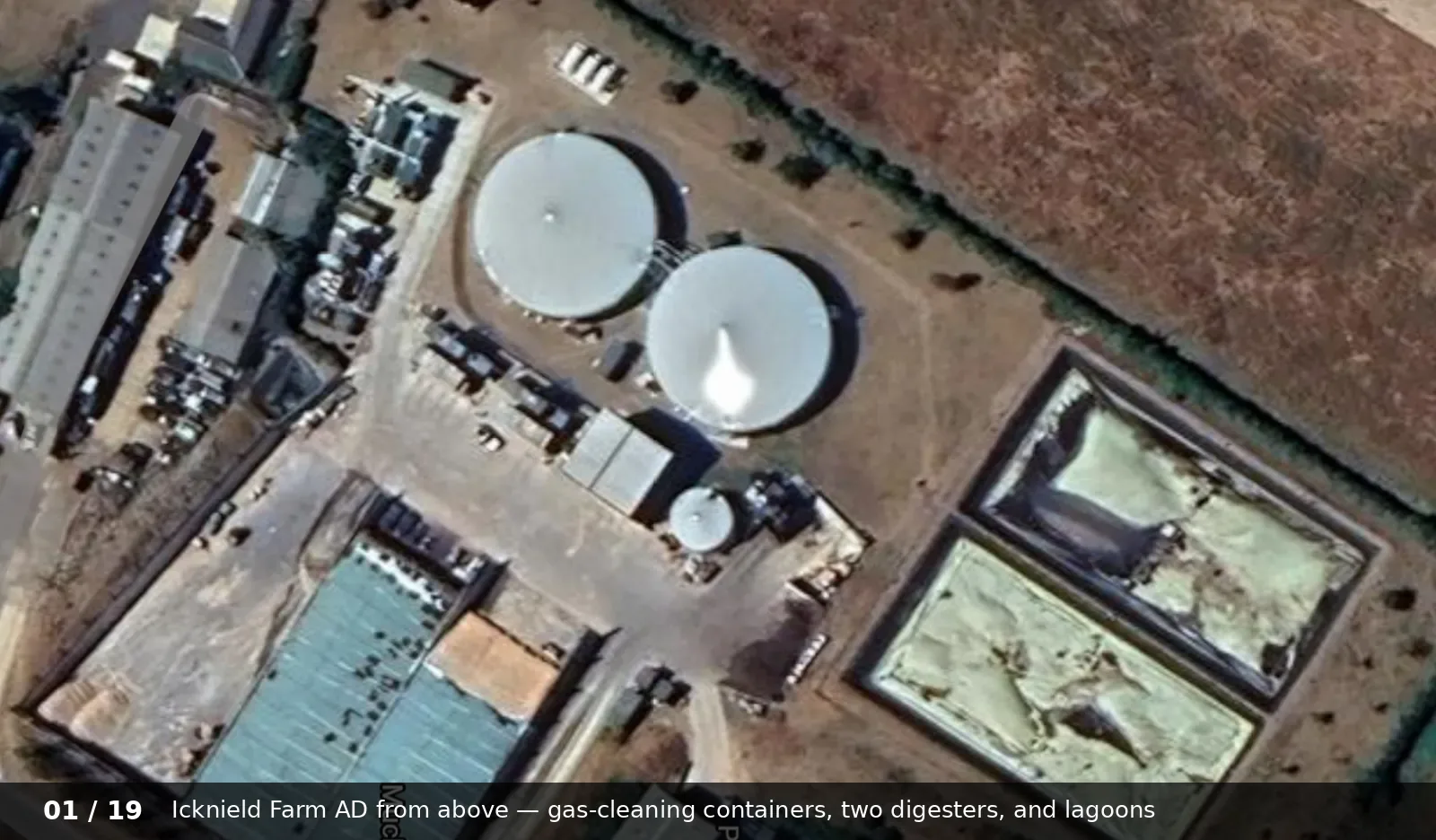
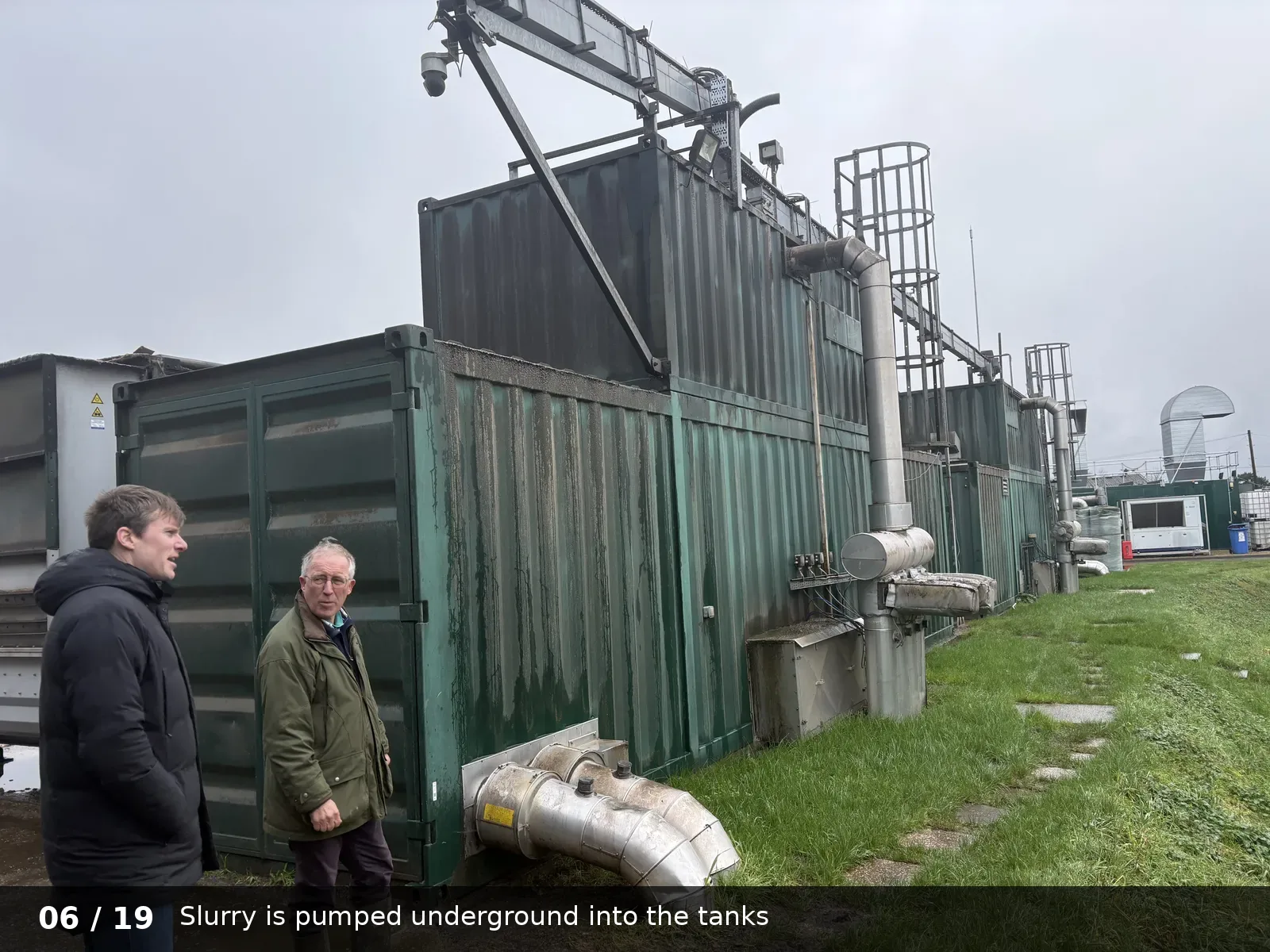
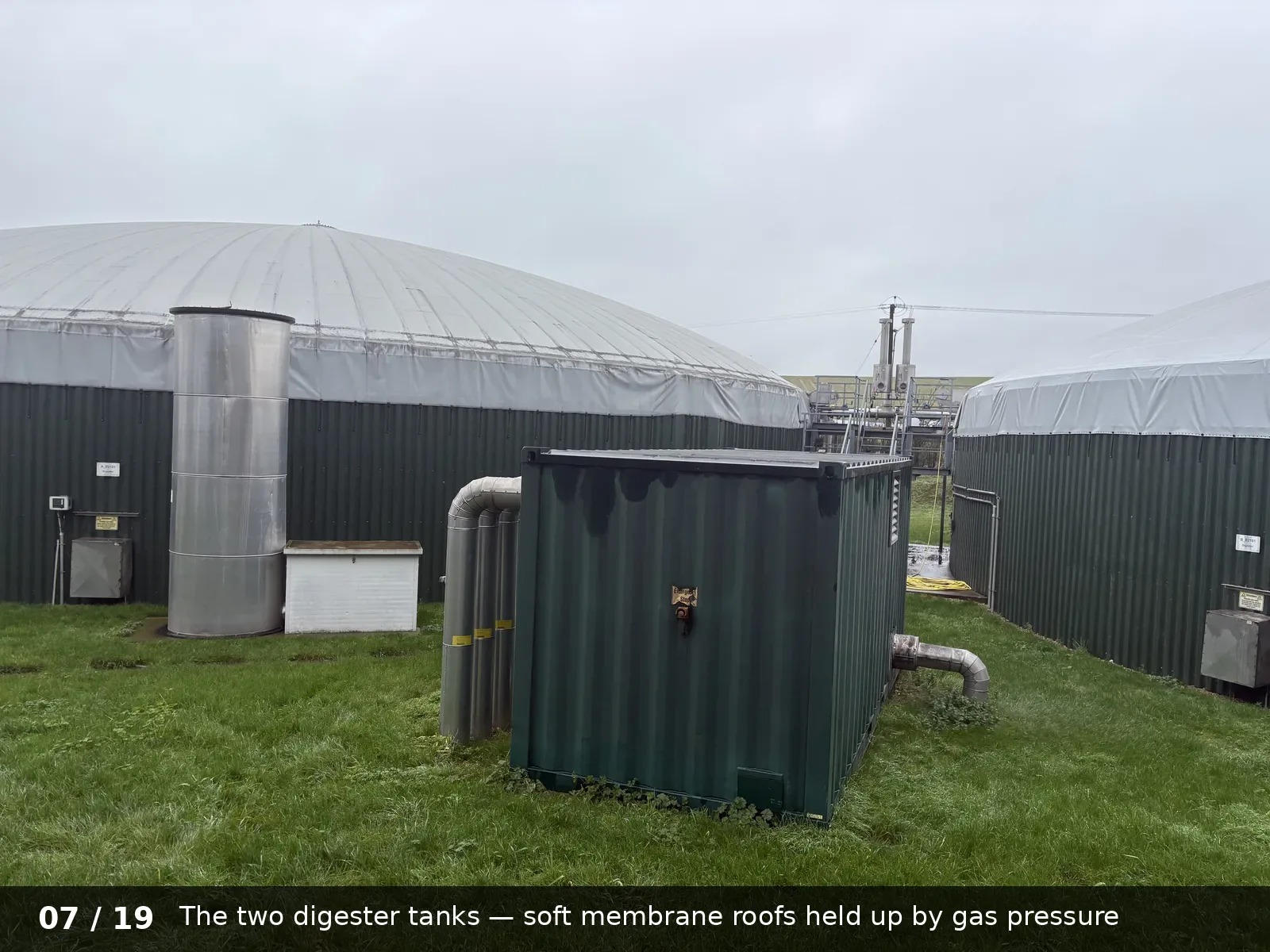
Two large circular tanks, each holding around 4,500–4,800 cubic metres of slurry, sit half-buried in the ground. The roofs are soft membranes, held up purely by gas pressure.
Inside, communities of microbes breakdown the plant material over a retention time of about 58–60 days, producing biogas — roughly a 50/50 split of methane and carbon dioxide, with trace amounts of hydrogen sulphide. Biogas from crop‑based digesters typically contains 50–70% methane, most of the remainder is CO₂, and small amounts of H₂S and other gases (Shen et al., 2015; Ryckebosch et al., 2011).
Four submersible electric motors in each tank keep the slurry moving. They sit on adjustable slides and can be raised, lowered, and rotated to avoid dead spots where solids accumulate. The mixers are repositioned roughly once a month. Continuous, energy‑efficient mixing is a well‑established design principle for minimising scum layers and ensuring uniform conditions throughout the digester (Appels et al., 2008).
Through the porthole into one of the digester tanks — the bubbling is biogas being released as microbes break down the slurry.
The plant was originally designed to run at 37°C — standard mesophilic temperature, as specified by the German engineers. But during the second summer, the temperature climbed and they could not bring it back down. Everyone panicked. “We were panicking, we had air conditioning, all the heat exchanges trying to keep it cool — failed.”
The expected disaster never arrived. The biology adapted. And then David checked the numbers: “David, our number man, did the sums, and said, ‘Ooh, we've got more gas.’”
The plant now runs at around 46°C. They also pushed dry matter content from the designed 6% up to about 10%. “We were told that wouldn't work… except for our numbers.” Gas production nearly doubled — from the original design capacity to around 700 cubic metres per hour— with very little physical modification to the plant. This mirrors a wider body of work showing that, for many substrates, carefully managed thermophilicor temperature‑phased digestion at 45–55°C can give higher methane yields and faster kinetics than mesophilic operation, provided stability is maintained (Labatut et al., 2014; Shen et al., 2015).
“We basically put the foot on the accelerator and kept putting it down.”
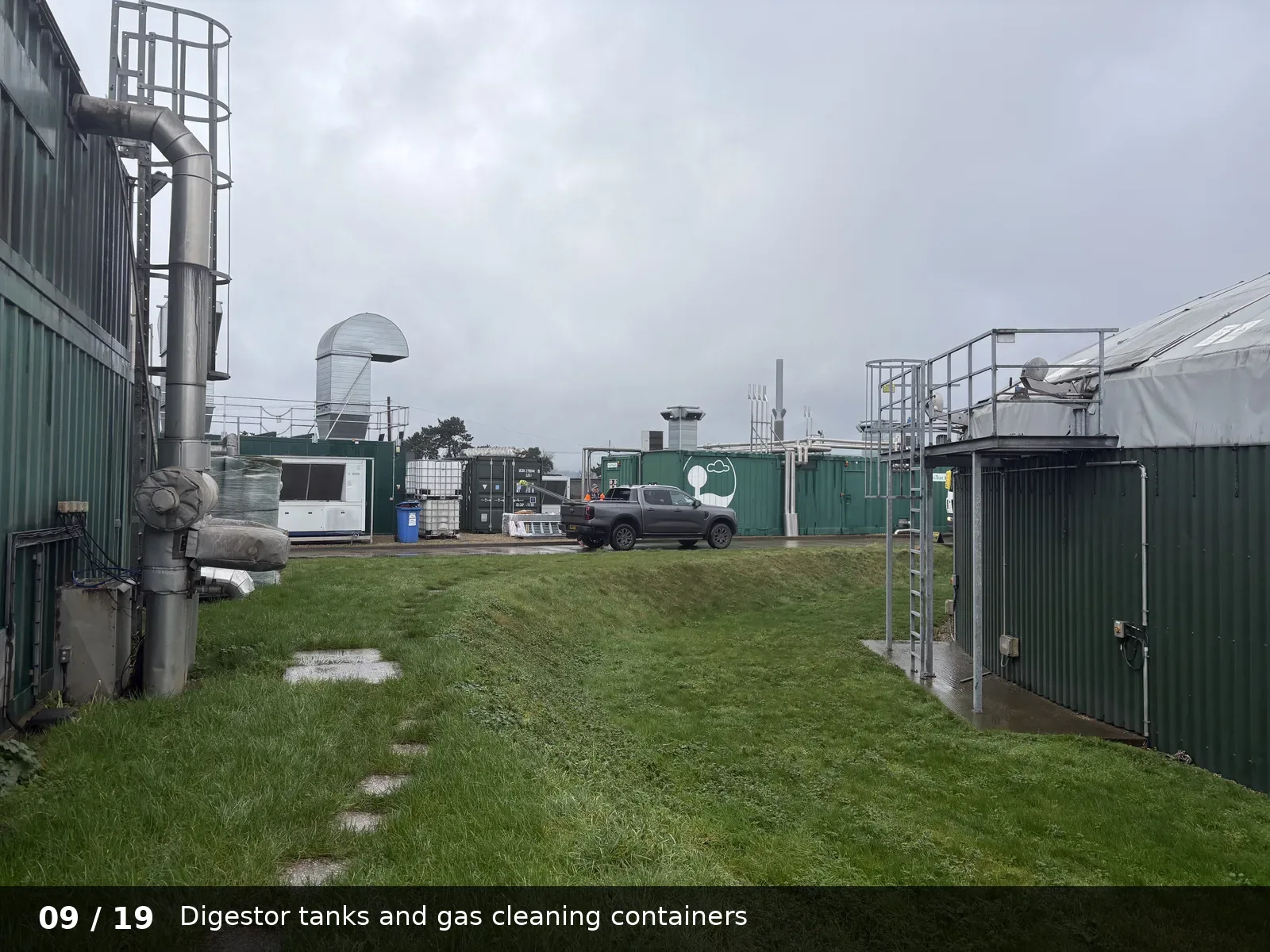
The raw biogas goes through several cleaning steps.
Condensing — cooled quickly to remove water. Water removal by chilling is standard practice before further upgrading and compression (Ryckebosch et al., 2011).
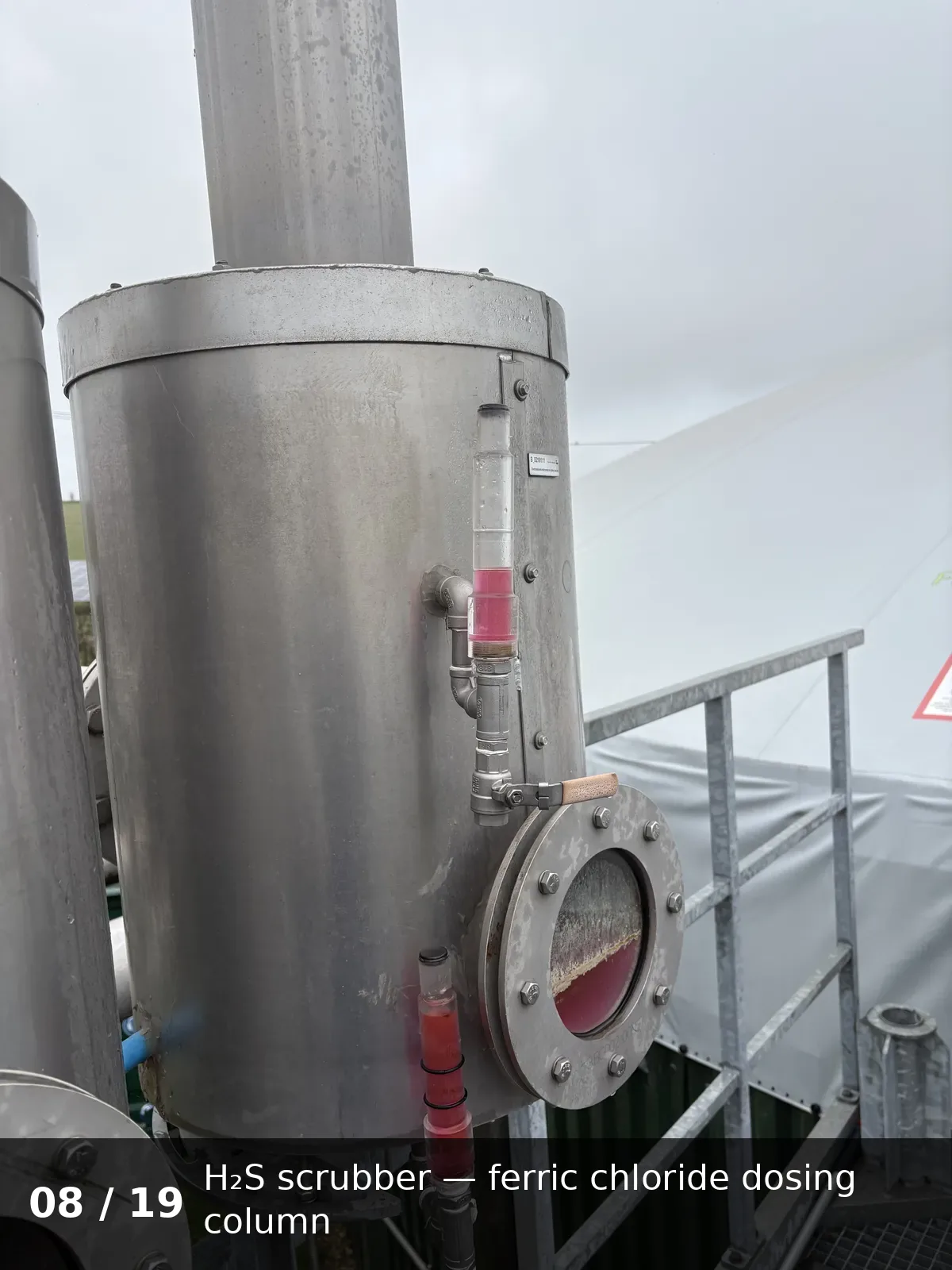
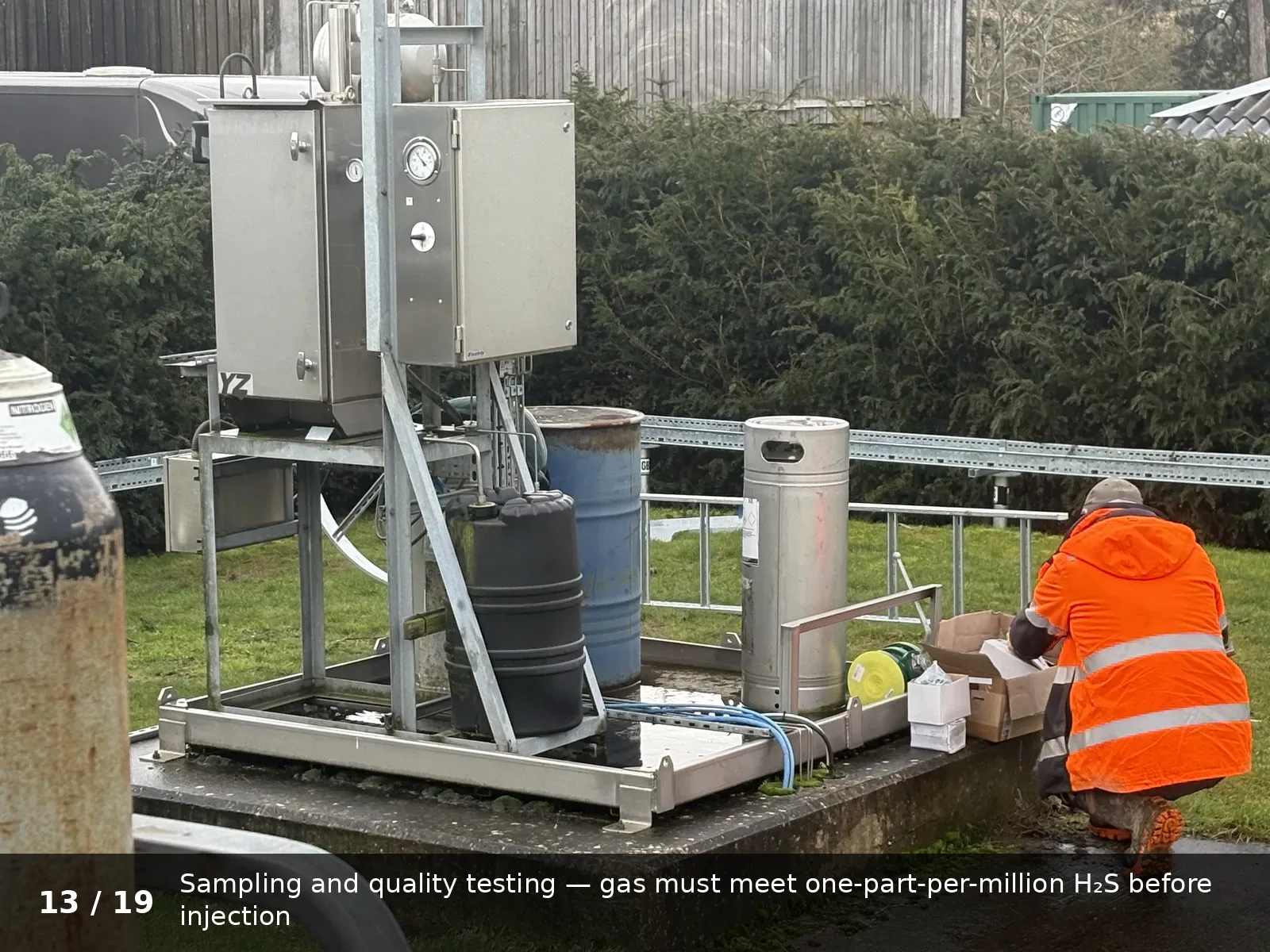
Hydrogen sulphide removal — ferric chloride is dosed into the substrate, plus a measured amount of oxygen is added to consume H₂S; activated carbon filters then catch the last traces. The tolerance for the gas grid is about one part per million, because much of the UK's pipework is steel and H₂S converts to sulphuric acid. “It'll dissolve an engine in three months,” Guy noted. A wide range of studies confirm that H₂S must be reduced to very low levels to prevent corrosion, and that iron‑salt dosing, controlled micro‑aeration and activated carbon polishing are effective, commercially proven approaches (Vu et al., 2022; Ryckebosch et al., 2011; Shenet al., 2015).
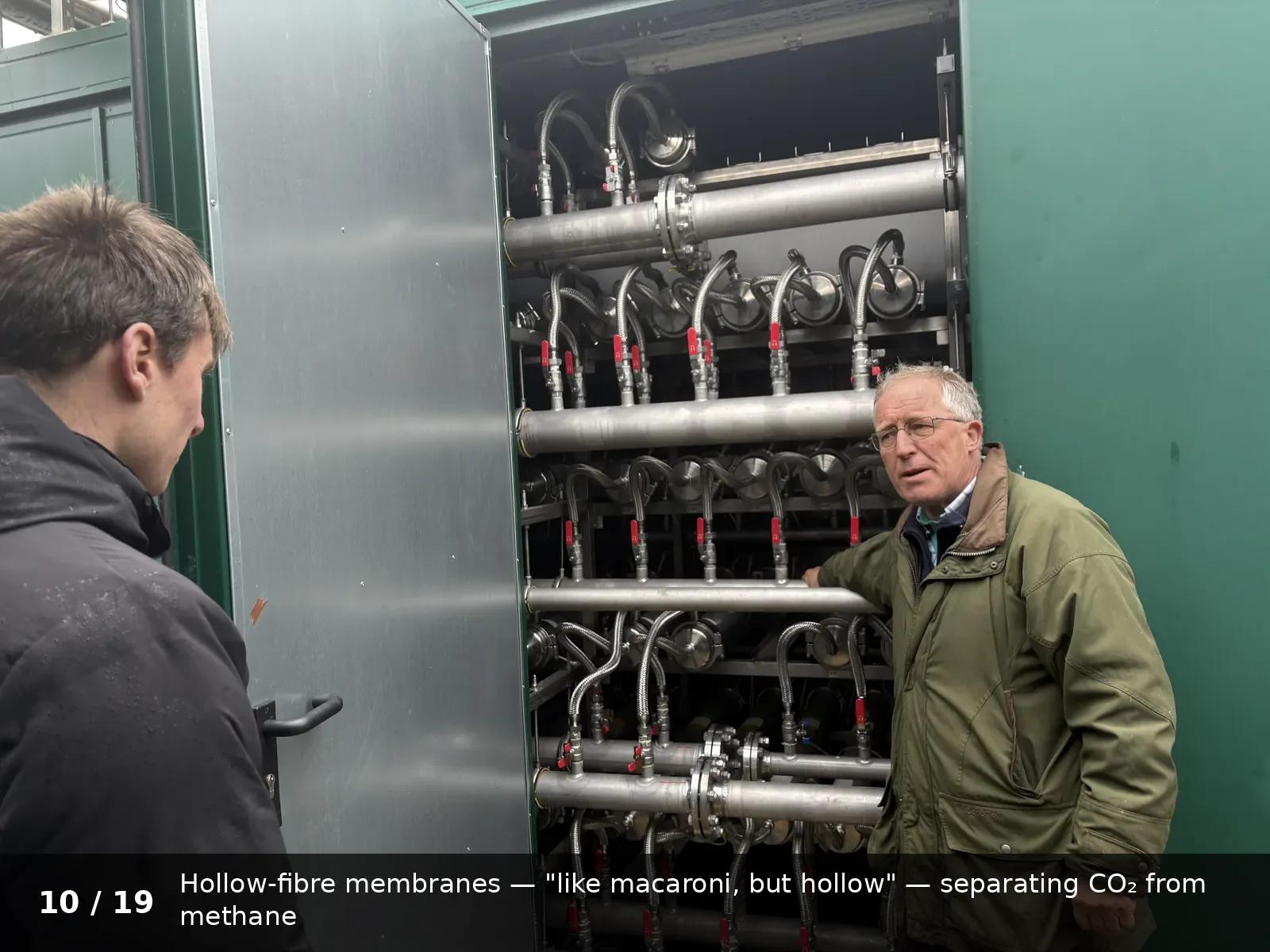
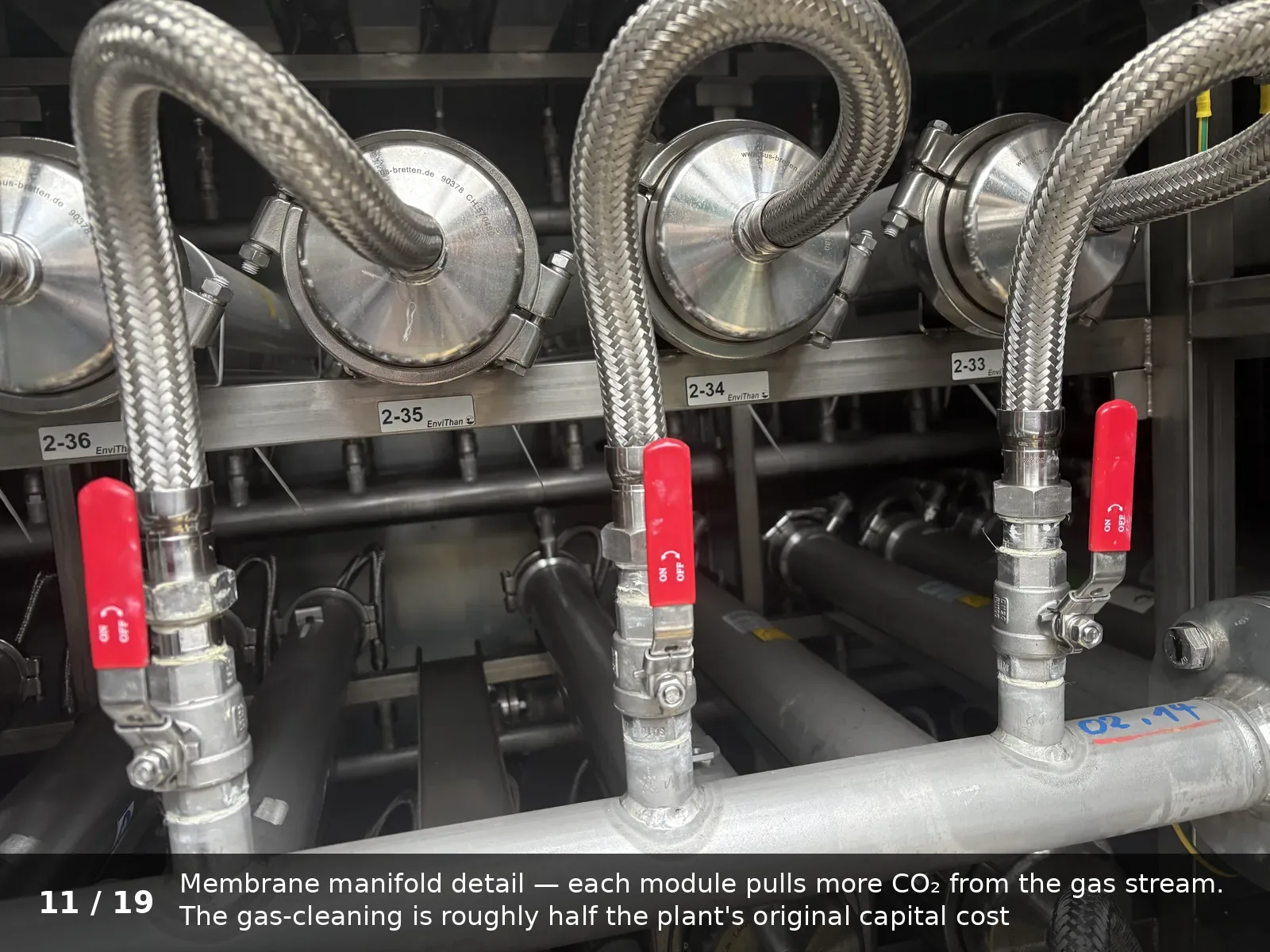
Membrane separation — the gas passes through hollow-fibre membranes (Guy described them as “like macaroni...spaghetti, but they're hollow”). CO₂, the smaller molecule, passes through the membrane walls. Methane, the larger molecule, stays inside. Membrane‑based upgrading has become one of the dominant biogas‑to‑biomethane technologies because it is modular, scalable and capable of delivering pipeline‑quality gas with high methane recovery (Sun et al., 2015; Basu et al., 2010; Bauer et al.,2013).
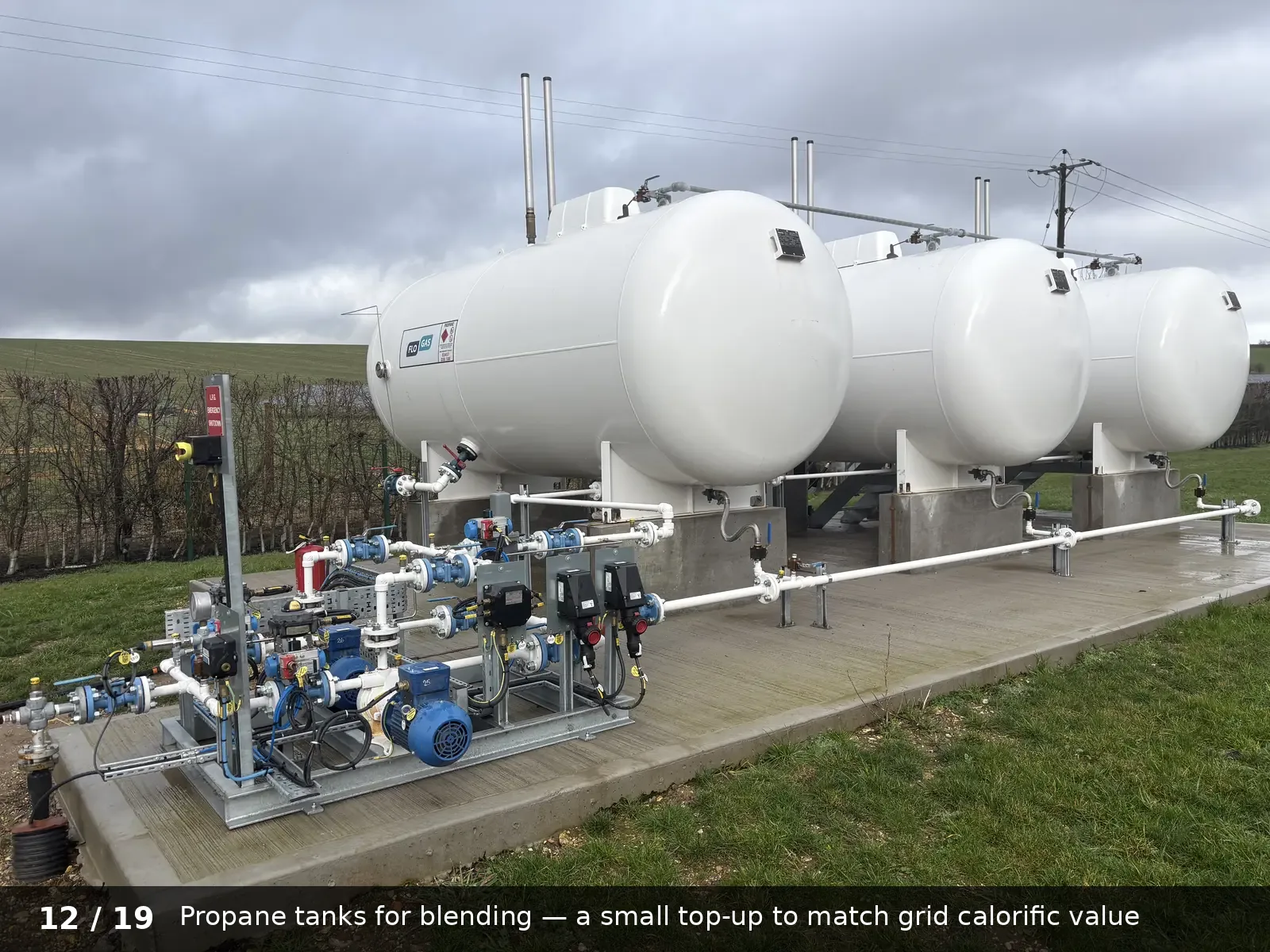
Propane addition — pure biomethane has a slightly lower calorific value than the mixed gas already in the grid pipeline, so a small amount of propane is blended in before injection to meet grid energy‑content specifications (Sun et al., 2015).
The gas cleaning cabins represented roughly half the original capital cost of the entire site, reflecting how critical and technically sophisticated this part of the system is (Bauer etal., 2013).
What comes out is biomethane that is functionally identical to fossil natural gas. It flows straight into the adjacent gas main (IEA, 2025; Shen et al., 2015).
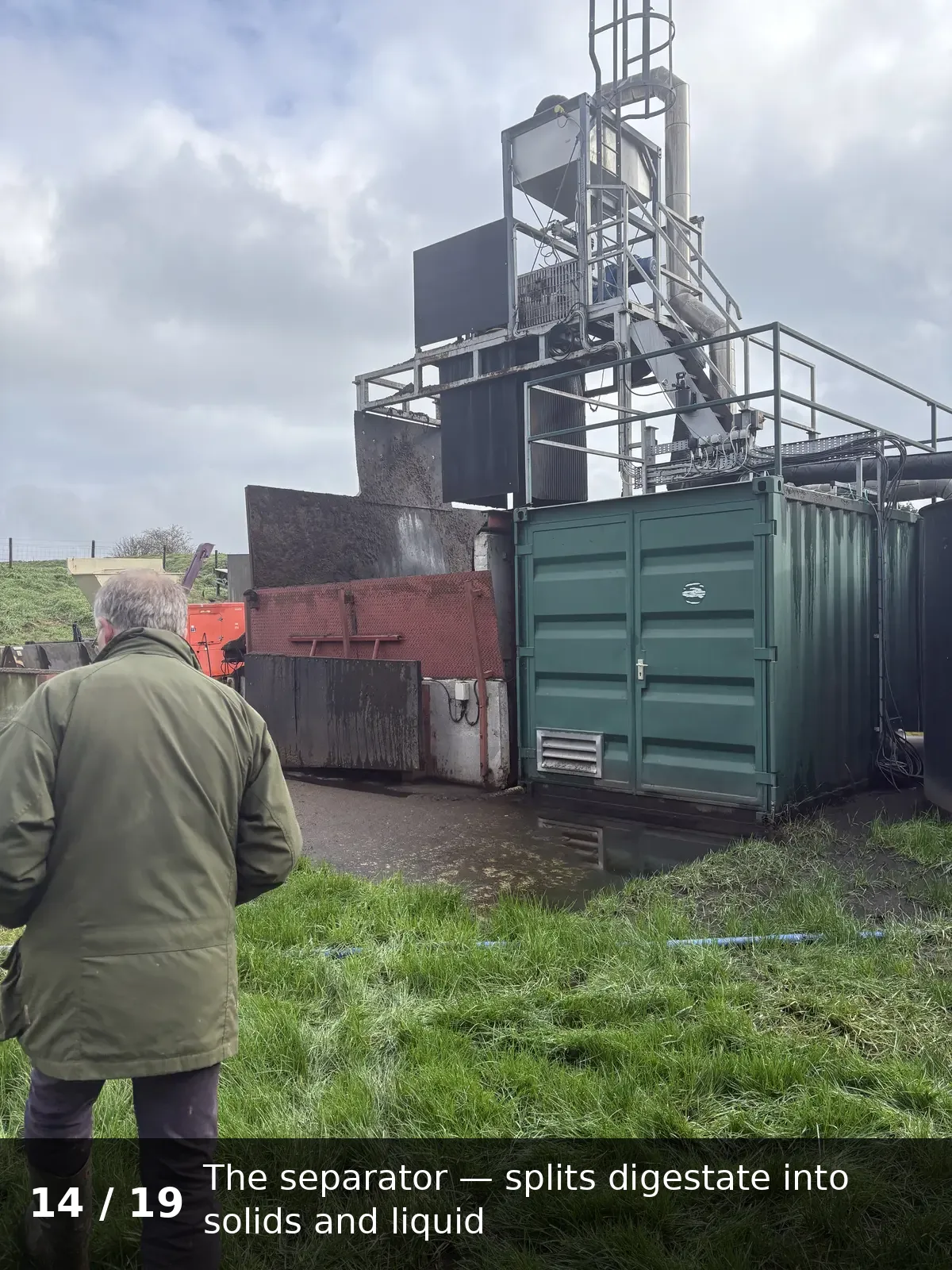
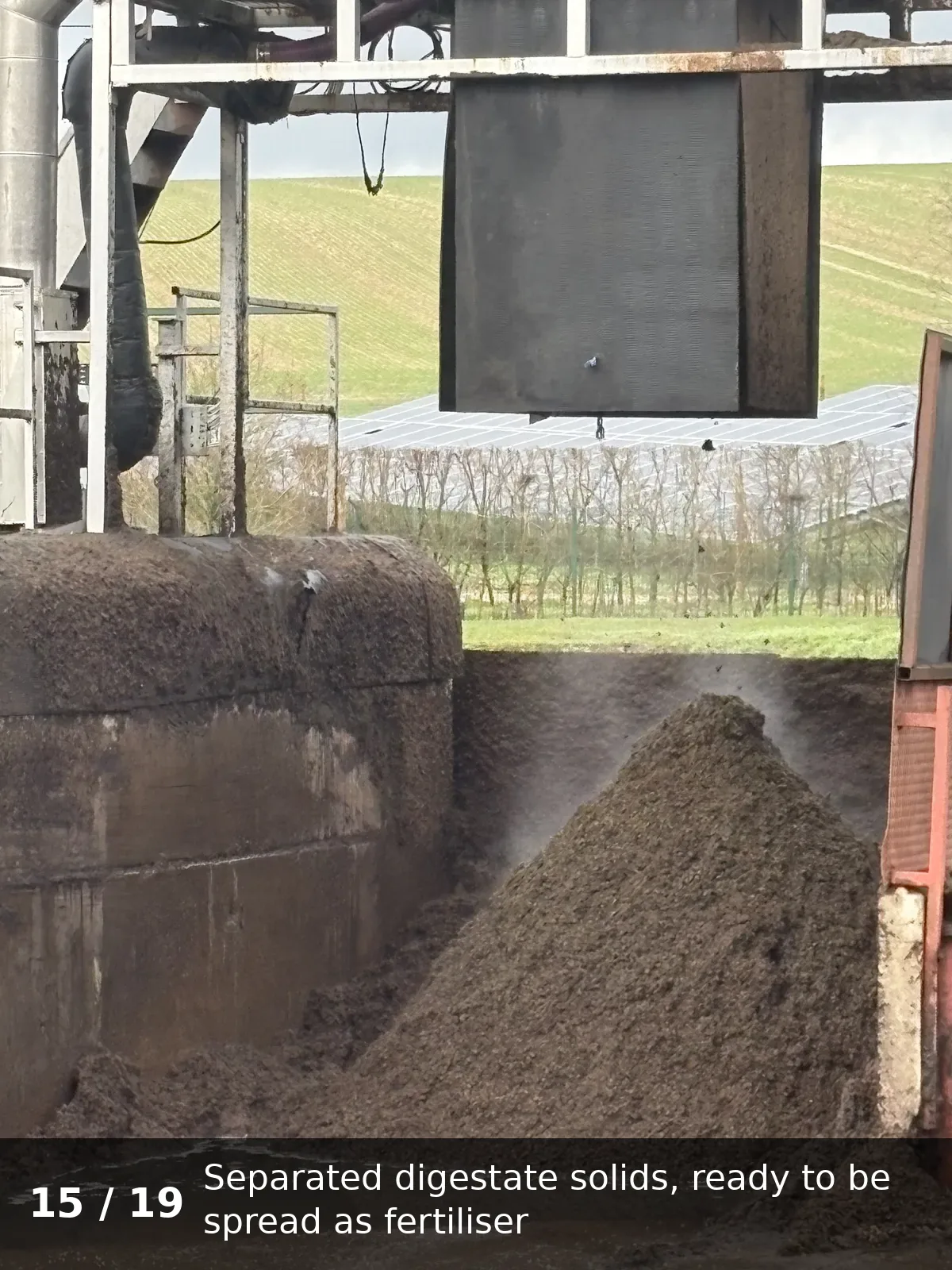
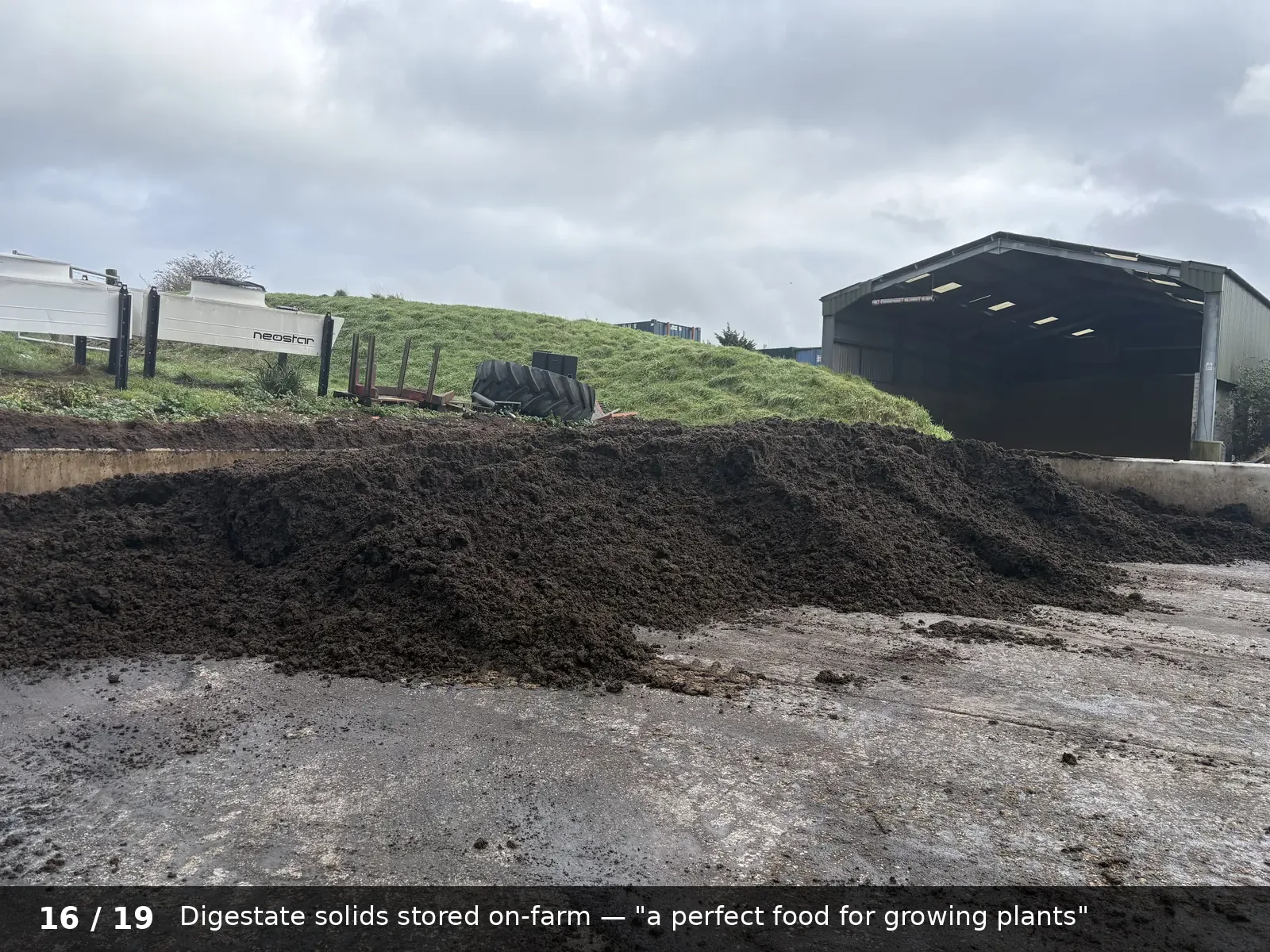
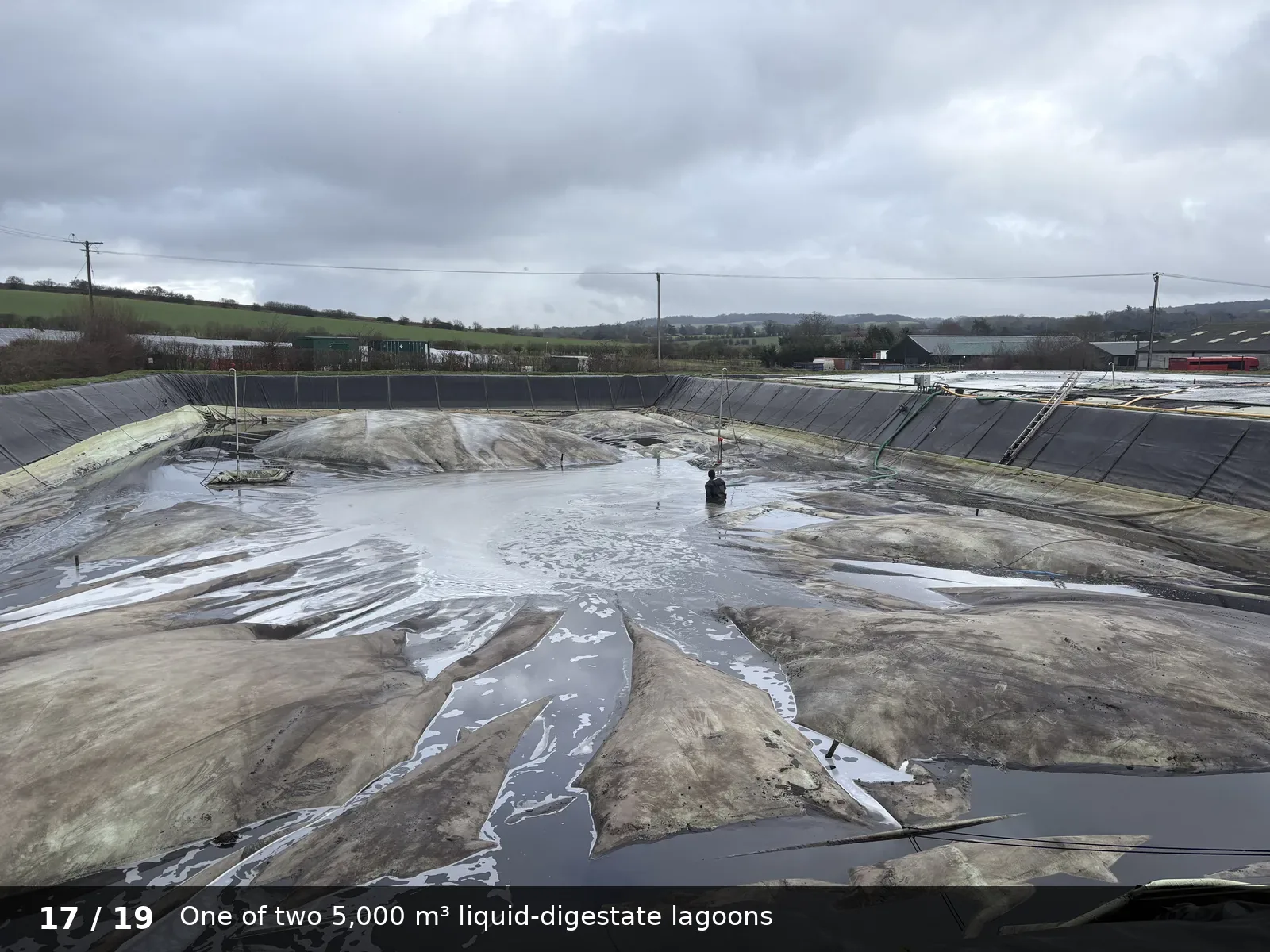
Once the biogas is drawn off, the leftover digestate is separated into solids and liquid. The solids are moved out by tractor for fertiliser use twice a week. The liquid is stored in two 5,000 cubic-metre lagoons and some of it is spread onto farming paddocks by contractors.
The digestate contains about 7 kilos of nitrogen, 4 kilos of potassium, and 2.5 kilos of phosphate per cubic metre, plus sulphur — “a perfect food for growing plants.” Studies across Europe show that digestate can match or outperform mineral fertilisers in delivering plant‑available N, P and K and supporting crop yields (Möller and Müller, 2012;Tambone et al., 2010; Nkoa, 2014).
Guy's maize and hybrid rye are now grown entirely on digestate. More than 50% of his wheat crop uses it too. His purchased fertiliser bill dropped from around 1,000 tonnes a year to about 250–300 tonnes. This kind of reduction in mineral fertiliser use is consistent with field studies where digestate replaces a large fraction of synthetic N andP inputs (Saveyn and Eder, 2014; Möller and Müller, 2012).
“So the only effective waste is carbon dioxide —vented off in the gas cleaning process. That's it.”
Guy made a telling comparison. With a conventional electricity-generating AD plant, you cannot get above about 50%energy efficiency — that is just the thermodynamics of an internal combustion engine, plus parasitic loads. In other words there are hard physical limits on how efficient an engine can be, and then you lose a bit more to running the hardware itself.
By cleaning the gas and injecting it into the grid instead, Icknield Farm captures close to 80% of the energy in the feedstock. “Because we're not burning the gas... we're keeping a lot of the energy, which we're able to sell.” Independent assessments of gas‑to‑grid plants support the idea that biomethane pathways can convert a larger fraction of feedstock energy into useful end‑use energy than combined heat and power (CHP) configurations, especially when upgraded gas displaces high‑value fossil natural gas (Ryckebosch et al., 2011; IEA, 2025).
The plant currently produces about 700 cubic metres of biomethane per hour and has a green subsidy on top of the base gas price. In the early years, with gas sold forward at favourable prices, the returns were exceptional. “Put it this way — in four years, we could have almost paid off the entire debt.” This pattern — high capital cost but strong cash flow under supportive incentive schemes — is common to many early European biomethane plants (Bauer et al., 2013; IEA, 2025).
The plant runs with just 1.5 full-time staff on site, backed by the EnviTec maintenance arm under contract and outside contractors for digestate spreading. Lean staffing, backed by OEM maintenance contracts, is a typical model for farm‑scale AD operations (Weiland, 2010). Guy's most common advice to anyone thinking about building an AD plant? “ (Our land availability is) too small. People always ask me this question... We should definitely have taken more space inside the fence. There's things we want to do but we can't, for lack of space.”
Guy was blunt about why many AD plants in the UK have failed. “Something like 70% of them — the developers, the people with the money, said, ‘Oh yeah, we're gonna do the gas, that's gonna be really brilliant.’ And, ‘Oh yeah, we can get the farmers to pay for it. (the waste)’ . And they've ended up having to pay farmers to take it away. And done themselves in. Bankrupt.”
The problem is digestate disposal. If you do not own the surrounding farmland, you are at the mercy of whoever does. “This is the bit where it can go wrong in a new plant... it's always coming out (the waste).” If you are the farmer who owns the plant, you have a massive advantage — you need the fertiliser. Industry reviews and farm‑level studies echo this: digestate logistics and land access are often the fulcrum on which AD business models succeed or fail (Huygens et al., 2019; IEA, 2025).
Because Guy uses organic digestate rather than manufactured fertiliser, he avoids the carbon footprint of fertiliser production — roughly 4 tonnes of CO₂ for every tonne of mineral nitrogen manufactured. He is also building soil carbon, and the farm participates in carbon credit schemes. “That is worth £34 a tonne per hectare,” he said. Life‑cycle analyses indicate that replacing mineral nitrogen with digestate can significantly reduce overall greenhouse gas emissions, partly by avoiding the energy‑intensive Haber–Bosch process and partly by increasing soil organic matter (Möller and Müller, 2012; Nkoa, 2014; IEA, 2025).
The first six months of operating the plant were, in Guy's words, “a nightmare.” Alarms at odd hours, new equipment misbehaving, small construction errors causing unexpected blockages.
Over time, Guy's plant manager deliberately shifted to preventive maintenance. His philosophy is practical: “I value my sleep more than I value his money” he laughed, “I spend the money to make sure I get my sleep.”
There are not many moving parts —just pumps, pneumatic gate valves, and standardised components. “There aren't many moving parts. It was quite carefully, cleverly designed. The German's are good at that.” Design guidance for AD plants emphasises using standardised components and robust preventive maintenance regimes to minimise unplanned downtime (Weiland, 2010; Bauer et al., 2013).
Icknield Farm AD is a working example of how a relatively small operation — less than 3 hectares of plant on a family farm — can produce meaningful quantities of green gas, return nutrients to soil, cut fertiliser costs, build carbon, and generate income. It runs on materials the food system cannot use. It produces little waste (some CO2). For wastes and residues in particular, the wider literature suggests biomethane can deliver 50–80% greenhouse-gas savings relative to fossil gas, as well as co‑benefits for waste management and soil health (Bauer et al., 2013; IEA,2025; Möller and Müller, 2012).
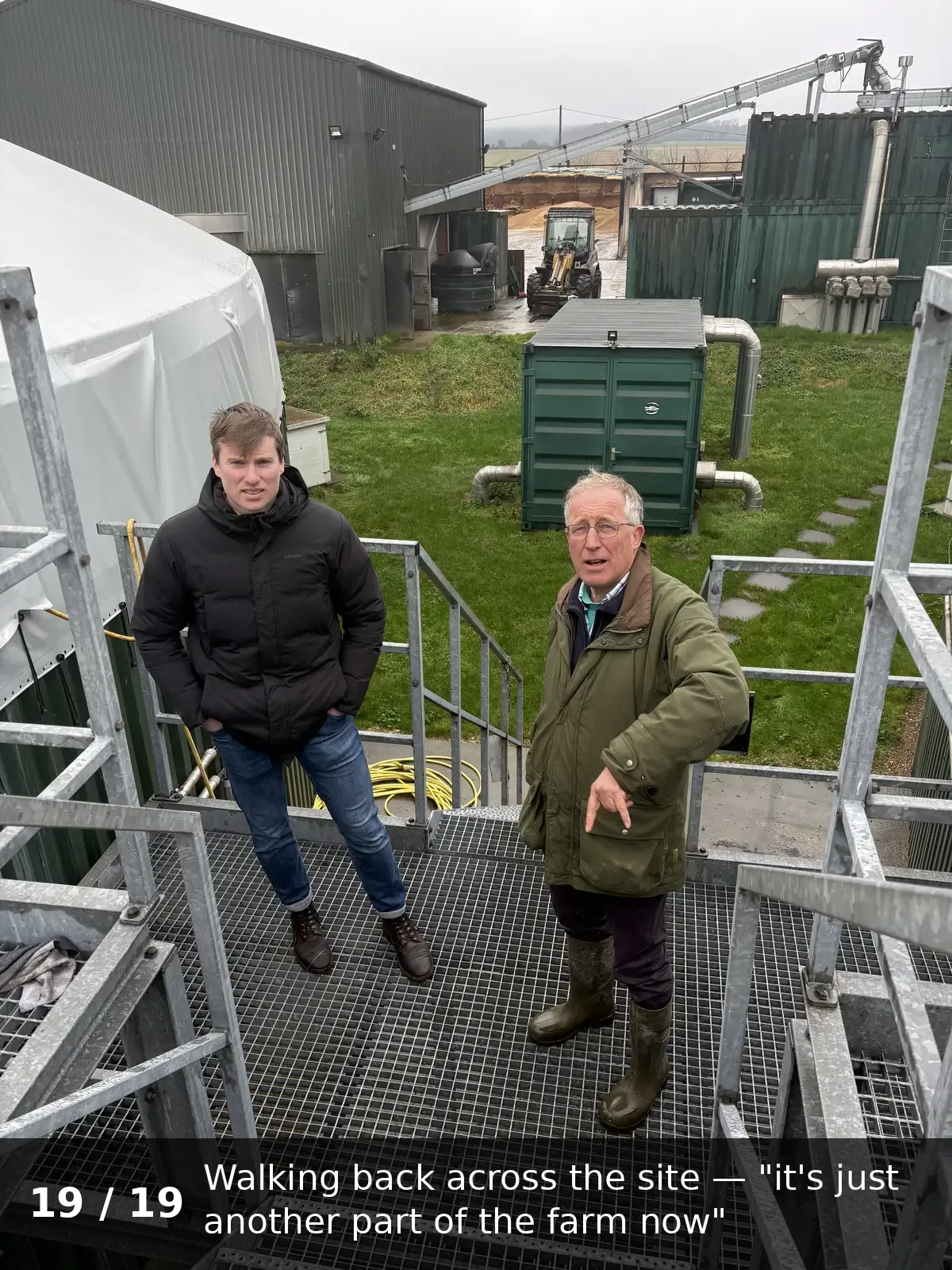
As Guy put it, walking back towards the green gates: “It's just another part of the farm now.”
Angelidaki, I., Karakashev, D.,Batstone, D.J., Plugge, C.M. and Stams, A.J.M. (2011) ‘Biomethanation and its potential’, Methods in Enzymology,494, pp. 327–351. Available at:https://doi.org/10.1016/B978-0-12-385112-3.00016-0.
Appels, L., Baeyens, J., Degrève, J.and Dewil, R. (2008) ‘Principles and potential of the anaerobic digestion of waste‑activated sludge’, Progress in Energy and Combustion Science, 34(6), pp. 755–781. Available at:https://doi.org/10.1016/j.pecs.2008.06.002.
Basu, S., Khan, A.L., Cano-Odena, A.,Liu, C. and Vankelecom, I.F.J. (2010) ‘Membrane-based technologies for biogas separations’, Chemical Society Reviews,39(2), pp. 750–768. Available at: https://doi.org/10.1039/B817050A.
Bauer, F., Hulteberg, C., Persson, T.and Tamm, D. (2013) Biogas upgrading –Review of commercial technologies. SGC Rapport 2013:270. Malmö: Swedish Gas Technology Centre (SGC). Available at:https://lucris.lub.lu.se/ws/files/5465492/4580054.pdf.
Herrmann, C., Idler, C. and Heiermann, M. (2016) ‘Biogas crops grown in energy crop rotations: Linking chemical composition and methane production characteristics’, Bioresource Technology, 206, pp. 23–35.Available at: https://doi.org/10.1016/j.biortech.2016.01.058.
Huygens, D., Saveyn, H., Tonini, D.,Eder, P. and Delgado Sancho, L. (2019) Technical proposals for selected new fertilising materials under the Fertilising Products Regulation (Regulation (EU) 2019/1009). EUR 29841 EN. Luxembourg: Publications Office of the European Union. Available at:https://publications.jrc.ec.europa.eu/repository/handle/JRC117856.
IEA (2025) Outlook for Biogas and Biomethane: Delivering on the Net Zero Pathway. Paris: International Energy Agency. Available at:https://www.iea.org/reports/outlook-for-biogas-and-biomethane.
Labatut, R.A., Angenent, L.T. andScott, N.R. (2014) ‘Conventional mesophilic vs. thermophilic anaerobic digestion: A trade-off between performance and stability?’, Water Research, 53, pp. 249–258.Available at: https://doi.org/10.1016/j.watres.2014.01.035.
Möller, K. and Müller, T. (2012)‘Effects of anaerobic digestion on digestate nutrient availability and crop growth: A review’, Engineering in Life Sciences, 12(3), pp. 242–257. Available at:https://doi.org/10.1002/elsc.201100085.
Nkoa, R. (2014) ‘Agricultural benefits and environmental risks of soil fertilization with anaerobic digestates: A review’, Agronomy for Sustainable Development, 34(2), pp. 473–492. Available at:https://doi.org/10.1007/s13593-013-0196-z.
Ryckebosch, E., Drouillon, M. andVervaeren, H. (2011) ‘Techniques for transformation of biogas to biomethane’, Biomass and Bioenergy, 35(5), pp.1633–1645. Available at: https://doi.org/10.1016/j.biombioe.2011.02.033.
Saveyn, H. and Eder, P. (2014) End‑of‑waste criteria for biodegradable waste subjected to biological treatment (compost and digestate): Technical proposals. EUR 26425 EN. Luxembourg: Publications Office of the European Union. Available at:https://publications.jrc.ec.europa.eu/repository/handle/JRC87124.
Scarlat, N., Dallemand, J.-F. and Fahl, F. (2018) ‘Biogas: Developments and perspectives in Europe’, Renewable Energy, 129, pp. 457–472.Available at: https://doi.org/10.1016/j.renene.2018.03.006.
Shen, Y., Linville, J.L.,Urgun-Demirtas, M., Mintz, M.M. and Snyder, S.W. (2015) ‘An overview of biogas production and utilization at full-scale wastewater treatment plants (WWTPs) in the United States: Challenges and opportunities towards energy-neutral WWTPs’, Renewable and Sustainable Energy Reviews,50, pp. 346–362. Available at: https://doi.org/10.1016/j.rser.2015.04.129.
Sun, Q., Li, H., Yan, J., Liu, L.,Yu, Z. and Yu, X. (2015) ‘Selection of appropriate biogas upgrading technology—A review of biogas cleaning, upgrading and utilisation’, Renewable and Sustainable Energy Reviews, 51, pp. 521–532. Available at:https://doi.org/10.1016/j.rser.2015.06.029.
Tambone, F., Scaglia, B.,D’Imporzano, G., Schievano, A., Orzi, V., Salati, S. and Adani, F. (2010)‘Assessing amendment and fertilizing properties of digestates from anaerobic digestion through a comparative study with digested sludge and compost’, Chemosphere, 81(5),pp. 577–583. Available at: https://doi.org/10.1016/j.chemosphere.2010.08.034.
Vu, H.P., Nguyen, L.N., Wang, Q., Ngo, H.H., Liu, Q., Zhang, X. and Nghiem, L.D. (2022) ‘Hydrogen sulphide management in anaerobic digestion: A critical review on input control, process regulation, and post‑treatment’, Bioresource Technology, 346, 126634. Available at:https://doi.org/10.1016/j.biortech.2021.126634.
Weiland, P. (2010) ‘Biogas production: current state and perspectives’, Applied Microbiology and Biotechnology, 85(4), pp. 849–860.Available at: https://doi.org/10.1007/s00253-009-2246-7.
If you have a particular situation you would like to discuss, please get in touch.
Contact Cobalt 59